By Dayna Mason
For most of history, people had somewhere to go that asked very little of them beyond showing up. A pub, a coffeehouse, or a diner where time moved more slowly and presence was enough.
There is a particular feeling that comes from sitting somewhere you’re not required to explain yourself. You’re not at home, where the walls know too much, and you’re not at work, where you’re expected to produce something. You’re simply present—one person among others, sharing space without obligation.
There’s a difference between being alone and being by yourself in public. The first can feel heavy; the second often doesn’t. Somewhere along the way, many of us lost the places that made that distinction possible. We kept our homes and our jobs, but the spaces in between—the ones that held us without asking much in return—quietly disappeared.
The Space Between Home and Work
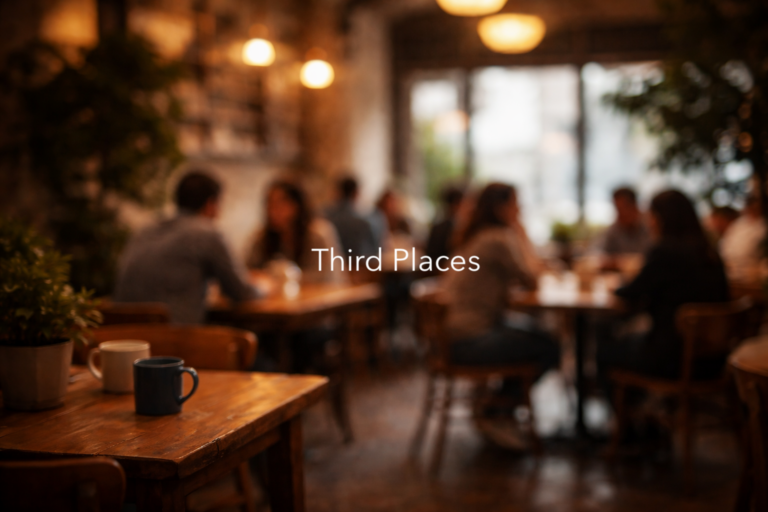
Sociologist Ray Oldenburg eventually gave these spaces a name: third places. The first place is home. The second is work. The third is where you go to exist without performing either role. This named something people already understood intuitively. Life needs a middle. A neutral ground.
What made these places work wasn’t their design so much as their attitude. You didn’t need an invitation. You didn’t need a reason. You didn’t need to justify how long you stayed or what you did while you were there. You could talk, or listen, or sit quietly with a drink. Presence was enough.
What Third Places Offered
In pubs and coffeehouses, conversation happened easily but wasn’t mandatory. Familiar faces mattered more than close relationships. Recognition—being nodded at, remembered, or simply expected—created a sense of continuity. These places offered something steady, free of expectation, especially during transitions. Between jobs. Between relationships. Between versions of themselves.
When the Middle Disappeared
Over time, many of these spaces have thinned out. Cities grew. Suburbs spread. Work moved indoors and then online. Leisure became something scheduled or consumed rather than shared. Porches and sidewalks disappeared. Community became something you had to plan for, instead of something you stumbled into. We reorganized life around efficiency and privacy and assumed connection would take care of itself.
By the late twentieth century, many people no longer had a reliable place to go that wasn’t home or work. You could go out—but there was usually an expectation attached. To be entertained. To meet someone. To leave when you were finished.
In its early days, Starbucks seemed to understand the need for a third place. The appeal wasn’t just the coffee; it was the feeling that you were allowed to sit there. That you could be alone in public without appearing lost. That you could open a notebook, stare out a window, or stay longer than necessary with a single cup.
The details mattered. Chairs that invited staying. A low hum of sound that softened silence. The quiet permission to linger without explanation. You didn’t have to talk to anyone—but you could. You didn’t have to leave—but you might. It wasn’t perfect, and it wasn’t intimate in the way older third places often were. But it met a need. And for a while, it worked.
As coffee shops grew, the pressure to move people through them grew too. Speed replaced staying. That shift isn’t unique to Starbucks—it happens anywhere time starts to matter more than presence.
Third places depend on time that isn’t tracked. As work collapses into home and social life shifts onto screens, the absence of shared physical space becomes more noticeable. There are fewer places where people can simply be, and be around others, without needing a reason.
What’s missing is familiarity. Being seen without being evaluated. True third places don’t need to be loud or lively. They don’t require programming or events. They work best when they’re accessible, comfortable, and unhurried. They appear when people are given room to exist together without pressure, and they fade when that room is taken away.
People don’t gather because they’re thirsty, they gather because being alone all the time is heavier than it looks.
A Future Where People Stay
A true third place leaves some space unfilled. Arrival isn’t rushed. Seating turns people toward one another without requiring conversation. Light and sound soften the room, making both silence and conversation—and staying—feel easy. These spaces work because they’re low-pressure and comfortable, predictable and unhurried. They don’t ask people to be anything—just give them somewhere to sit, stay, and belong.
This is where event venues have real potential. Even temporary spaces can feel like third places when comfort outweighs efficiency and presence matters more than performance. Open houses, community dinners, reading nights, or other loosely structured gatherings can create that experience of being together without obligation.
The future of third places isn’t about inventing something new. It’s about spaces that stop rushing people through and allow time and interaction to unfold. The places where not every moment is managed and people are free to arrive, linger, and leave without explanation.
That’s usually where people stay.